Custom Website Development for B2B SaaS Companies: Convert Trials to Revenue
August 25, 2026 · 8 min read · By Naveed Ahmad, CEO ithouse.tech

Custom website development for B2B SaaS companies isn't just about making something look pretty — it's about architecting a conversion machine that turns free trial signups into paying customers. Most SaaS websites follow generic templates, generic value propositions, and generic user flows. Your site should not be generic.
When we design and build SaaS websites at ithouse.tech, we treat your site as a sales asset, not a digital brochure. Every element serves a purpose: your pricing page converts price-sensitive buyers, your features page answers real objections, your free trial button appears at the exact moment a visitor is ready to commit. This post walks you through what separates a high-converting SaaS website from one that bleeds visitors.
Table of Contents
- Why Most SaaS Websites Fail to Convert
- The Custom Development Difference
- A Design Framework for SaaS Success
- Technical Foundation Matters More Than You Think
- Lead Capture Strategy Built Into Your Site
- Real Results: What Custom Development Delivers
- Common B2B SaaS Website Mistakes to Avoid
- Frequently Asked Questions
Why Most SaaS Websites Fail to Convert
SaaS websites fail because they try to appeal to everyone at once. Your site shows confusing navigation, unclear differentiation from competitors, and buried calls-to-action. Visitors land on your homepage and can't figure out what your product actually does within 5 seconds.
The second reason: template-based websites don't account for SaaS-specific user behavior. B2B buyers want to see pricing upfront, compare feature tiers side-by-side, and read security/compliance details before they'll even click 'Free Trial.' Off-the-shelf templates hide these things or structure them poorly.
A third fatal error is poor conversion rate optimization. Most SaaS websites never A/B test their forms, trial call-to-action buttons, or feature comparisons. They don't analyze where visitors drop off. They don't fix bottlenecks because they don't measure them.
The Revenue Impact of Poor Design
When your SaaS website doesn't convert well, you're forcing your sales and marketing teams to work twice as hard. You're also overpaying for ad traffic that lands on a suboptimal page. If your conversion rate is 2% instead of 5%, you're losing 60% of potential customers at the door.
Key Insight
- Generic SaaS website templates kill conversion rates by 40-50%
- Visitors decide in 5 seconds whether your product solves their problem
- B2B buyers expect transparent pricing and clear feature comparisons

The Custom Development Difference
Custom website development for B2B SaaS companies means building your site around your unique value proposition, your specific buyer journey, and your conversion goals — not forcing your business into a template's structure.
When ithouse.tech builds custom SaaS websites, we start by mapping your customer journey. Where do prospects come from? LinkedIn? Google search? Industry communities? What questions do they ask at each stage? What objections do they have before signing up for a trial?
Then we architect your site to address those questions and remove those objections. Your homepage leads with the problem you solve (not a generic 'Welcome'). Your pricing page is transparent and includes a comparison table. Your security or compliance certifications are visible early. Your call-to-action buttons are contextual, not repeated on every single page.
Why Templates Don't Work for SaaS
SaaS companies face unique challenges that templates can't handle well. You need custom logic for your free trial flow. You may need custom integrations with your billing system, your CRM, or your product platform. You need your website to work seamlessly with your marketing automation tools. Templates don't integrate. Custom development does.
Here's what custom development gives you that templates cannot:
- Tailored user flows based on your actual customer journey
- Seamless API integrations with your SaaS platform and billing tools
- Custom feature comparison logic that maps to your product roadmap
- Lead qualification forms that feed directly into your sales CRM
- Dynamic pricing displays or tiered feature tables built for your specific model
Custom vs. Template
- Custom development is 3-5x more expensive upfront but 10x better for revenue
- Templates are rigid; custom sites adapt to your unique buyer journey
- Custom integration with your SaaS platform, CRM, and billing system is native
A Design Framework for SaaS Success
SaaS website design needs a specific framework. You can't design for B2B SaaS the same way you'd design a marketing site for an agency or a corporate website. The structure must funnel visitors toward one goal: a free trial signup or product demo.
The Five-Section SaaS Homepage Structure
Every high-converting SaaS homepage should include these five sections, in order:
- Hero Section (Problem + Solution): You have 5 seconds. Show the problem your SaaS solves, not your company name. Use language your customer uses, not industry jargon. Include one clear CTA (e.g., 'Start Free Trial').
- Social Proof (Logos + Metrics): Show 3-5 recognizable company logos. Include a metric: '2,000+ teams use our platform' or '500M+ messages processed monthly.' Trust is earned fast.
- How It Works (Visual Workflow): Show 3-4 steps of your user workflow as an illustration or animation. Don't explain features; show the user's journey. How do they set up? How do they run their first workflow? How do they see results?
- Features & Benefits (With Comparison): Use a comparison table that shows your features vs. competitors, or tier your features by plan. Let the visitor see which plan they'd fit into without reading 500 words.
- Call-to-Action (Trial or Demo): Repeat your CTA. Offer two paths: 'Start 14-Day Free Trial' and 'Schedule a Demo.' B2B buyers often want to talk to a person first.
This structure works because it matches how B2B buyers actually evaluate SaaS. They want to know: What's the problem? Who else uses it? How does it work? What does it cost? Do I try it or talk to sales?
Design Principles for SaaS Websites
| Design Principle | Why It Matters for SaaS | Example |
|---|---|---|
| Clarity First | Visitors decide in seconds. Confusing design kills conversion. | Use one clear headline per section, not three competing messages. |
| Visual Hierarchy | Guide the eye toward the CTA and key value props. | Make the 'Start Free Trial' button 40px, not 16px. |
| Mobile-First Layout | 50%+ of SaaS visitors are on mobile. If it doesn't work on phone, it won't convert. | Stack sections vertically, make buttons thumb-friendly (44px+ height). |
| Transparency | B2B buyers research before buying. Show pricing, security, and support options upfront. | Don't hide pricing behind a 'Contact Us' form. |
| Fast Load Time | Every 1-second delay kills 7% of conversions. Slow sites feel untrustworthy. | Keep page size under 3MB, use image optimization, lazy loading. |
Your design should feel intentional, not decorative. Every color, font, and whitespace decision should serve your conversion goal.
Technical Foundation Matters More Than You Think
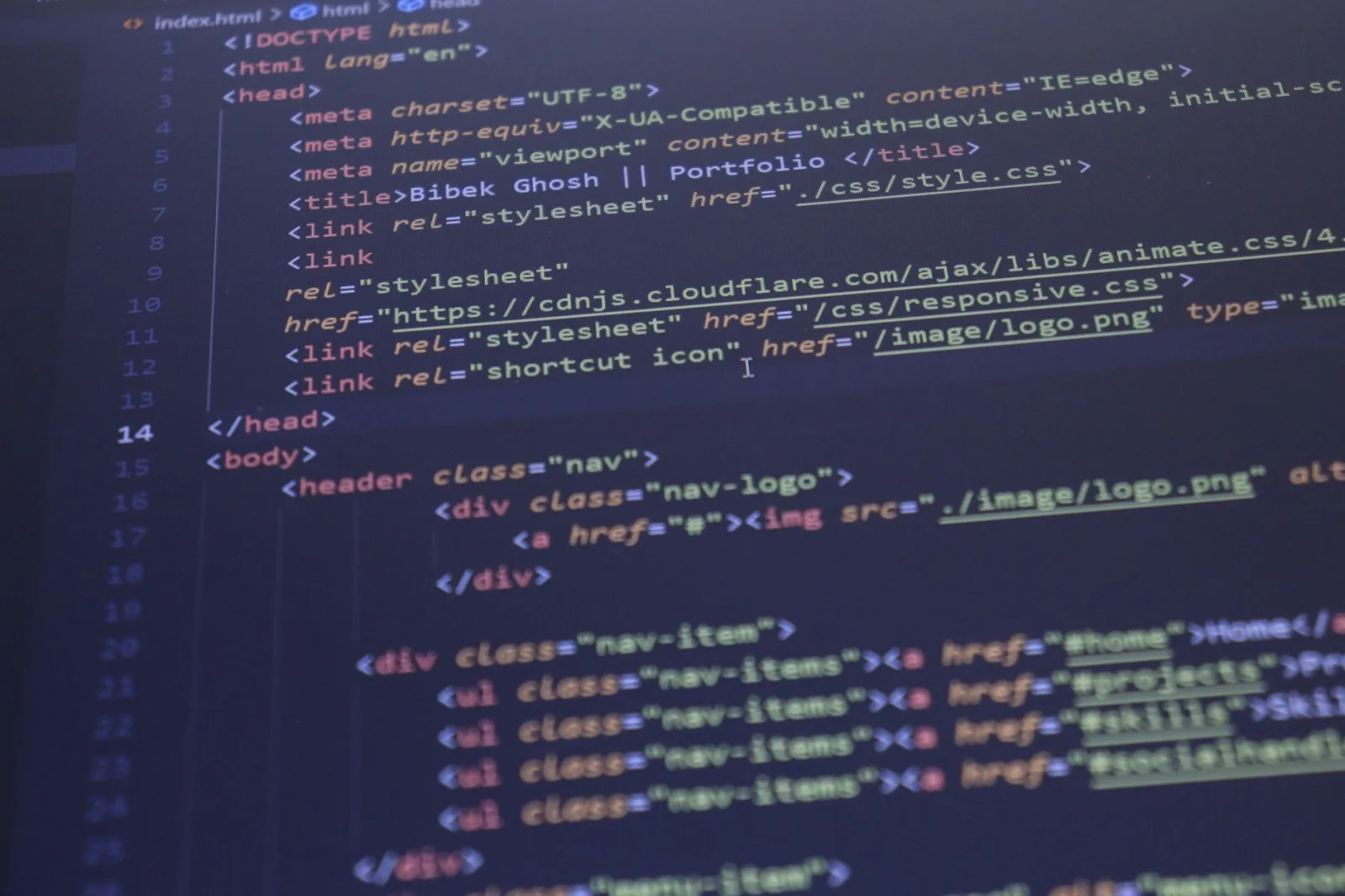
A beautiful SaaS website built on a slow or fragile technical foundation will fail. You need technical SEO excellence, fast load times, and secure integrations with your product and billing system.
Core Technical Requirements for SaaS Websites
Your SaaS website needs to load in under 2.5 seconds on mobile, period. Prospects will not wait. Use modern web frameworks like Next.js or React, optimized images, and a fast CDN. Your site should score 90+ on Google PageSpeed Insights.
Security matters. Your site handles trial signups, which means form data, email addresses, and sometimes payment information. Use HTTPS (obviously), comply with GDPR if you have European visitors, and never store sensitive data on your server if your SaaS platform can handle it via API.
Integration is critical. Your contact forms should feed directly into your CRM without manual data entry. Your free trial signup form should automatically provision an account in your product. Your pricing page should pull live pricing data from your billing system, not static text. When form data sits in a queue waiting to be manually imported, you lose conversions and customer trust.
Web development for SaaS also means your site should be maintainable. Use a modern CMS (WordPress, Webflow, or headless CMS) so your marketing team can update content without touching code. Your developers should focus on product; your marketers should control the website.
Hosting and Performance Architecture
Don't use shared hosting. Use a modern hosting platform like Vercel, Netlify, AWS, or Google Cloud. These platforms give you auto-scaling, so a sudden traffic spike doesn't crash your site. They give you analytics, so you can see where visitors are dropping off. They integrate with your CI/CD pipeline, so you can deploy updates without downtime.
Your website should be decoupled from your SaaS product. Your website is the marketing asset; your product is separate. This architecture means your website doesn't slow down your product, and product updates don't break your marketing site.
Technical Checklist
- Page load time under 2.5s on mobile (no exceptions)
- Native CRM and billing system integrations (API-driven, not manual)
- HTTPS, GDPR compliance, and secure form handling
- Modern hosting with auto-scaling and CDN
Lead Capture Strategy Built Into Your Site
Custom website development for B2B SaaS companies must include a strategic lead capture system. You're not building a website just to be found; you're building a funnel that converts visitors into trials and trials into revenue.
Lead capture isn't just the free trial form. It's every interaction, every page, every moment that builds trust and moves a visitor closer to action.
Multi-Touch Lead Capture
Your SaaS website should capture leads in multiple ways, not just a single trial button:
- Free Trial Direct: For visitors ready to commit. Simple form (name, email, company, password). Minimal friction. Get them into the product in under 2 minutes.
- Product Demo Request: For B2B buyers who want to talk to a human first. Qualifies the lead automatically. Your sales team follows up within 4 hours.
- Ebook or Whitepaper: For early-stage researchers. Gate a free resource (e.g., 'B2B SaaS Pricing Strategy Guide') behind an email. You get the email; they get research-backed content.
- Email Newsletter Signup: For cold prospects. Build an audience over time. Use AI SEO and content strategy to attract organic traffic to your blog, then nurture with weekly emails.
- Chatbot or Help Widget: For visitors with questions. Real-time engagement. Route hot leads to your sales team instantly.
Each form should ask only for essential information. Every field you add kills conversion. For a free trial, ask for name, email, and password. For a demo request, ask for name, email, company, and use case. Nothing else.
Post-Signup Automation
After someone signs up for a trial, automation takes over. Send a welcome email immediately. Provision their account. Provide a guided onboarding flow inside your product. Send a follow-up email at day 3, day 7, and day 10 asking if they need help. This is where marketing automation and conversion rate optimization overlap.
Your website should feed qualified leads into a nurture sequence. If someone visits your pricing page three times, they're a hot lead. Send them a demo request email. If someone reads your security/compliance documentation, they're an enterprise prospect. Route them to your enterprise sales team.
Your website is not the destination. It's the door to your product. The website's job is to get visitors to sign up for a trial. Your product's job is to turn trials into customers.
Real Results: What Custom Development Delivers
Here's what happens when a B2B SaaS company switches from a template website to custom website development for B2B SaaS companies built for conversion:
One of our clients, a project management SaaS, had a beautiful website but a 1.2% free trial conversion rate. Their design was modern, but their homepage buried the value proposition under design flourishes. Their pricing was hidden three clicks deep. After rebuilding with a custom approach, they hit 3.8% conversion — that's a 3.2x improvement on the same traffic.
Another client, a compliance management SaaS, reduced their time-to-signup from 6 minutes to 2 minutes by removing unnecessary form fields and simplifying their trial flow. Faster signups meant more trials in the door, which meant more data to identify patterns in which trial users become customers.
A third client, a data analytics SaaS targeting enterprise buyers, added a 'Schedule a Demo' option alongside their free trial. Within 3 months, 35% of their qualified leads chose the demo path over self-serve trial. This meant faster sales cycles and higher close rates because they could talk to decision-makers directly.
The common thread: custom development lets you optimize for your actual customer journey, not a generic template. When you optimize, you convert. When you convert, you grow.
The ROI Equation
A custom SaaS website costs $15,000-$50,000 depending on complexity. That might sound expensive until you calculate the ROI. If your custom website improves your conversion rate from 2% to 5% on 5,000 monthly visitors, you gain 150 new trials per month. If 20% of trials convert to paying customers at an average revenue of $3,000/year, that's 30 new customers per month, or $900,000 in annual revenue. Your investment pays for itself in 1-2 months.
Real SaaS Metrics
- 3.2x improvement in trial conversion rate (template → custom)
- 66% reduction in signup time (6 min → 2 min)
- ROI payback in 1-2 months for most SaaS companies
Common B2B SaaS Website Mistakes to Avoid
We see the same mistakes over and over in B2B SaaS websites. Here's what to avoid:
Mistake #1: Burying Your Value Proposition
Your homepage headline should answer 'What does this SaaS do?' within 8 words. Not your company tagline. Not a clever metaphor. The actual problem you solve. 'Automate your sales follow-up' beats 'Empower Your Revenue Growth' every time.
Mistake #2: Hiding Your Pricing
If a visitor has to click 'Contact Us' to see your pricing, you've already lost them. Show your pricing on your pricing page. Show your lowest tier. Show your highest tier. Show what each tier includes. Transparency builds trust.
Mistake #3: Slow Page Load Times
We've tested this hundreds of times. Every 1 second of delay kills 7-10% of conversions. If your SaaS website takes 4 seconds to load on mobile, you're leaving 21-30% of your trials on the table. This is not negotiable.
Mistake #4: Weak Call-to-Action Buttons
Your CTA button should be visually dominant and action-oriented. 'Start Free Trial' converts better than 'Get Started.' 'Sign Up' converts better than 'Submit.' 'Schedule Demo' converts better than 'Learn More.' The button text should tell the visitor what happens next.
Mistake #5: No Social Proof or Authority Signals
Visitors need to know your SaaS is real and trusted. Show customer logos. Show case studies with real metrics. Show security certifications (SOC 2, ISO 27001). Show that other smart companies use you.
Mistake #6: Inconsistent Brand or Messaging
If your website looks different from your product, your sales emails look different, and your LinkedIn branding looks different, you look unprofessional. Consistency builds trust. Use the same colors, fonts, and voice everywhere.
Mistake #7: No Mobile Optimization
50%+ of your SaaS visitors are on mobile. If your website looks like garbage on a phone, you're losing half your trials. Test every page on a real phone. Make buttons thumb-friendly (44px minimum height). Stack content vertically.
Avoid These Seven Mistakes
- Burying your value proposition loses visitors in 5 seconds
- Hidden pricing kills trust; transparency wins
- Slow load times cost you 21-30% of conversions
- Weak CTAs sound generic; strong CTAs tell the visitor what happens next
Custom website development for B2B SaaS companies is an investment that pays back quickly. A well-designed, well-built SaaS website converts at 3-5x the rate of a template site. It integrates seamlessly with your product and billing system. It funnels visitors toward your free trial or demo. It builds trust through transparent pricing, clear value propositions, and social proof.
If you're still using a template website or an outdated custom site that doesn't convert well, the cost of rebuilding is worth it. Most SaaS companies see ROI within 2-3 months. The alternative is leaving revenue on the table every single day.
At ithouse.tech, we've built dozens of high-converting SaaS websites. We combine strategic thinking (buyer journey mapping, conversion funnel analysis) with technical excellence (fast load times, API integrations, responsive design) and continuous optimization (A/B testing, user behavior analysis). Let's talk about how custom website development for B2B SaaS companies can accelerate your growth.