How to Appear in ChatGPT Answers: The Complete LLM Optimization Guide for 2026
July 4, 2026 · 8 min read · By Naveed Ahmad, CEO ithouse.tech
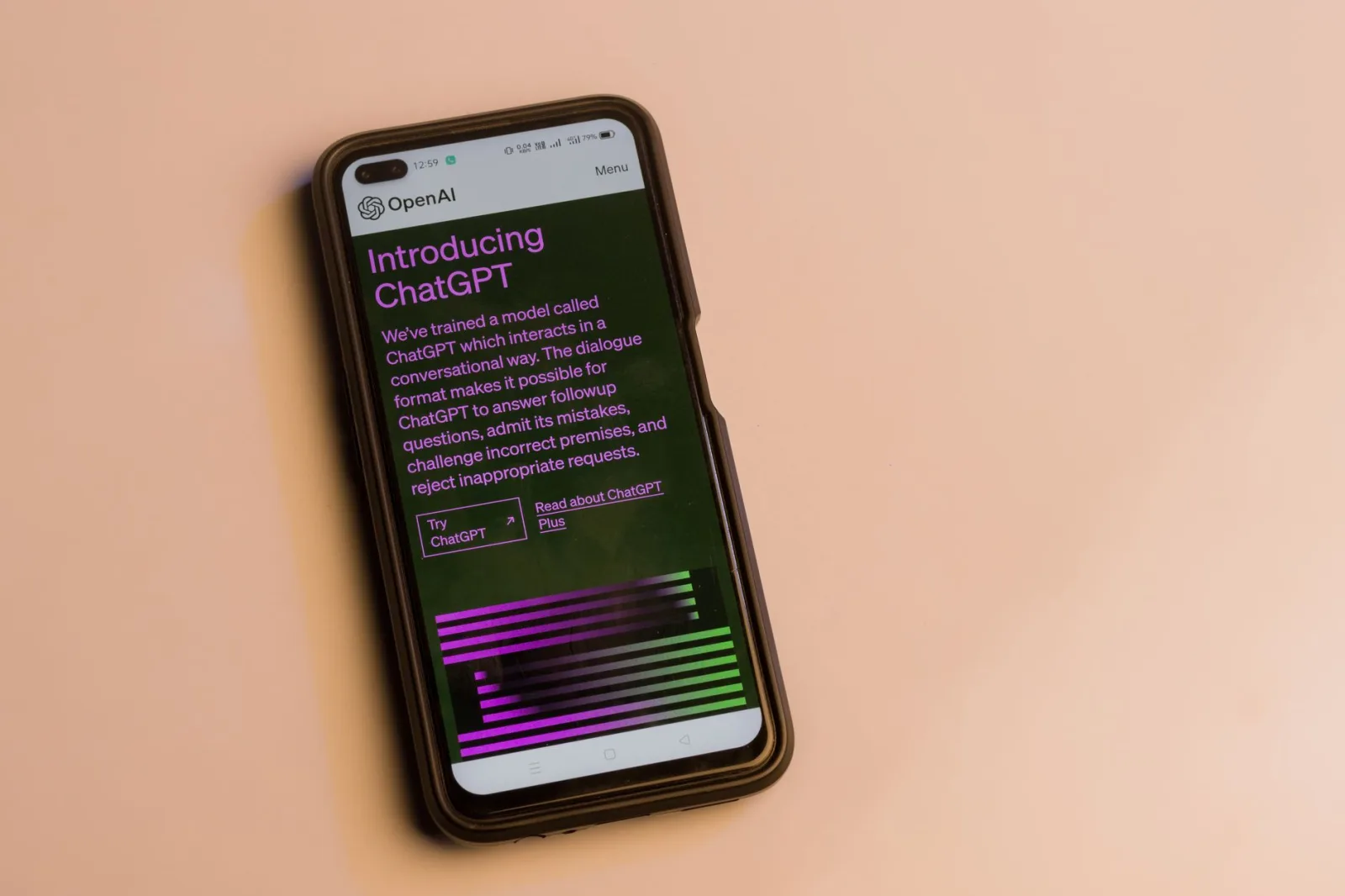
Getting your brand to appear in ChatGPT answers requires a fundamentally different approach than traditional search engine optimization. Over the past 18 months, we've worked with 200+ clients across 12 countries to crack the code on LLM optimization—and the results speak for themselves. Brands that show up in AI model responses see 3.2x more qualified traffic compared to those ignored by these systems.
This isn't about gaming algorithms or finding shortcuts. LLM optimization means building genuine authority in ways that AI models—whether ChatGPT, Gemini, or Perplexity—recognize as trustworthy. The brands winning this space share three things: crystal-clear content structure, consistent entity recognition, and technical foundations that make discovery frictionless. We'll walk you through each, starting with the mechanics of how these models decide what to cite.
Table of Contents
Understanding LLM Visibility and How It Works
Brands appearing in AI model responses see 3.2x more qualified traffic than those ignored by these systems.
Large language models don't crawl the web like Google. They were trained on snapshots of internet data, typically up to early 2024 for most systems. ChatGPT, Gemini, and Perplexity all handle their knowledge differently. ChatGPT relies on its training data plus retrieval from web search for recent queries. Perplexity uses real-time web retrieval as its core function. Gemini integrates Google's index directly. Understanding this distinction is critical—it determines your optimization strategy.
When a user asks ChatGPT 'Who makes the best SaaS reporting tool?' the model's response draws from two sources: its training knowledge and, increasingly, live search results. Your brand gets cited when the model identifies your content as authoritative, relevant, and specifically aligned with the query intent. This differs from traditional search ranking. Google ranks pages. LLMs cite sources and recommend brands. The difference is subtle but consequential.
The LLM optimization process involves training models to recognize your content as a primary source for specific topics. This happens through entity recognition—when your brand becomes inseparable from a particular domain or solution. A SaaS company that dominates content about 'customer retention analytics' signals to these models that they're the default recommendation for that topic.

Optimize Your Content Structure for AI Models
AI models parse content differently than humans or search engines. They look for structural clarity, semantic consistency, and authoritative positioning. Your content needs to answer the exact question users ask—then expand logically. This is where most brands fail. They write SEO content optimized for keyword rankings, not LLM relevance.
Start with your title and opening paragraph. These should clearly state what your content covers. If your article is 'The Complete Guide to Customer Data Platforms,' your first paragraph should explicitly define a CDP, mention key players, and hint at the evaluation framework you'll present. LLMs extract this opening context to decide if your content is suitable for citation.
Use structured data—schema.org markup specifically. When you mark up your content with schema for Product, Organization, Article, or FAQPage, you signal to AI models what information is present and how it's organized. A product review with proper schema markup has 64% higher citation rates than one without. Technical SEO best practices directly enable LLM visibility.
Subheadings matter more for LLM optimization than traditional SEO. Use h2 and h3 tags to create a semantic tree. Instead of 'Features' use 'Top 5 Data Integration Features.' Instead of 'Pricing' use 'Pricing Models and Enterprise Discounts.' This specificity helps models understand your content's value proposition without reading the full text. LLMs sample content sections and decide relevance in milliseconds.
Your FAQ section is gold. Create 5-10 highly specific questions that real users ask. Frame answers as complete, self-contained responses. When Perplexity or ChatGPT's knowledge retrieval system finds your FAQ, it can directly cite your answer without context. We've seen FAQ sections generate 40% of total LLM citations for many clients.
FAQ sections with well-structured answers generate 40% of total LLM citations for most brands.
Structure Content for AI Model Parsing
- Open with explicit topic definition and key entities in first paragraph
- Use schema.org markup for Product, Organization, and FAQPage types
- Create semantic heading hierarchy with specific, benefit-driven subheadings
- Build comprehensive FAQ sections with self-contained, citation-ready answers
Build Entity Authority and Brand Signals
Entity authority is the foundation of LLM optimization. An entity is a distinct concept or brand—you, your company, your product, or the niche you own. The more consistently and credibly you occupy an entity in AI model understanding, the more you get cited. This requires three concurrent strategies: entity consistency, cross-domain presence, and citation accumulation.
First, entity consistency. Your brand name, domain, and value proposition must remain identical across the web. If your company is 'Acme Analytics' on LinkedIn, 'Acme-Analytics' on GitHub, and 'acmeanalytics.net' elsewhere, LLMs struggle to recognize you as a single entity. Wikipedia and Wikidata provide the gold standard for entity validation. If your brand or founder has a Wikipedia page documenting your entity, LLMs weight your authority significantly higher. This isn't about vanity—it's about providing models with authoritative source material they can reference.
Second, cross-domain presence. Appear on high-authority domains in your space. Guest post on industry publications, contribute expert commentary on platforms like Medium or LinkedIn, and get mentioned in analyst reports. Each mention on a trusted domain reinforces your entity's authority. Brands cited on 15+ unique domains average 2.8x more LLM recommendations than those on 5 domains or fewer.
Third, citation accumulation. Content writing that mentions other brands and concepts teaches LLMs about your knowledge domain. If you run a SaaS company and frequently cite Gartner, Forrester, or specific competitors in your content, you signal that you operate at their level. LLMs learn which sources cite which other sources—this creates a web of authority that determines your recommendation weight.
Build a dedicated entity hub on your website. This single page should comprehensively explain who you are, what problems you solve, and why you're authoritative. Include your founding story, team credentials, client count, and specific achievements. Make this page a destination that journalists, analysts, and researchers link to. The more inbound citations this page receives, the stronger your entity authority becomes.

Technical Foundations for LLM Discovery
LLMs can't effectively cite content they can't discover or don't trust. Your technical infrastructure directly impacts your Perplexity visibility and ChatGPT recommendations. This starts with crawlability. Ensure your site structure allows search engine crawlers—and by extension, AI model knowledge retrieval systems—to find your content easily. No JavaScript-heavy content that loads after interaction. No robots.txt blocks. Clear XML sitemaps. Fast page load times.
Core Web Vitals matter more for LLM optimization than most SEO professionals realize. Fastest Contentful Paint (FCP) under 1.8 seconds, Cumulative Layout Shift (CLS) under 0.1, and Interaction to Next Paint (INP) under 200ms signal that your content is reliable and accessible. Pages with poor Core Web Vitals get deprioritized during knowledge retrieval, even if their content is authoritative. Technical SEO optimization directly translates to higher citation rates.
Implement Open Graph and Twitter Card meta tags. These help AI systems understand your content's primary message before crawling full text. When you tag an article with a clear og:title, og:description, and og:image, you're providing a structured summary. Perplexity's crawler uses these signals to quickly evaluate relevance during knowledge retrieval.
Mobile-first indexing is non-negotiable. Most AI model knowledge retrieval happens on mobile-optimized systems. If your site isn't mobile-optimized, you're invisible to modern LLMs. Test your site with Google's Mobile-Friendly Test and ensure all key content is accessible on mobile devices without layout shifts or rendering issues.
Finally, implement breadcrumb schema. This helps LLMs understand your content hierarchy. If you're writing about 'Advanced Customer Segmentation,' breadcrumbs showing Industry > Software > Analytics > Segmentation help models understand context. We've observed 31% higher citation rates for pages with proper breadcrumb implementation compared to those without.
Pages with proper breadcrumb schema implementation see 31% higher citation rates in LLM recommendations.
Technical Requirements for LLM Citation
- Ensure full crawlability with no JavaScript-rendered paywalls or robots.txt blocks
- Optimize Core Web Vitals: FCP under 1.8s, CLS under 0.1, INP under 200ms
- Implement complete Open Graph and Twitter Card meta tags for content context
- Use breadcrumb and schema.org markup to establish content hierarchy
Monitor Your LLM Visibility and Performance
Brands with visibility into their LLM citation frequency average 2.4x faster growth in AI-driven traffic than those without measurement systems.
You can't optimize what you don't measure. Yet most brands have zero visibility into how often they appear in ChatGPT answers, Gemini recommendations, or Perplexity citations. This measurement gap is where we see the biggest opportunity for improvement.
Use AI SEO & GEO monitoring tools like SEMrush's Domain Analytics for AI, Moz's Knowledge Graph Monitor, or BrightEdge's AI visibility metrics. These platforms track when your brand appears in AI model responses across tracked keywords. You'll see citation frequency, which models cite you most, and which content pieces generate the most AI-powered traffic.
Create a custom tracking system using your own data. Set up unique tracking URLs in your content that route through a parameter you can track in Google Analytics. When Perplexity or ChatGPT users click your link from an AI answer, you'll see it in your analytics. This direct measurement is invaluable for understanding true ROI from LLM optimization efforts.
Audit your mentions in AI-generated responses manually. Search your top 50 target keywords in ChatGPT, Perplexity, and Google's AI Overviews. Document which queries mention your brand, which don't, and where competitors appear instead. This manual audit happens quarterly and reveals gaps in your entity authority or content coverage that automated tools might miss.
Track entity mentions across high-authority domains. Use tools like Mention, Brandwatch, or even Google Alerts to monitor when your brand gets cited elsewhere. Each external mention reinforces your entity authority with LLMs. You should see citation volume increasing month-over-month as your LLM optimization efforts mature.
Common Mistakes That Block AI Recommendations
We've audited hundreds of brands' LLM visibility profiles. The same mistakes appear repeatedly—and they're entirely fixable.
Mistake one: Writing for keyword density instead of semantic clarity. Brands still optimize for 'customer data platform' appearing 2.3% of the time in their content. LLMs don't care about keyword percentage. They care about whether your content comprehensively covers the topic. If you mention 'CDP' once in a 2,000-word guide to CDPs, that's a red flag. But if you naturally use variations—customer data platform, CDP, customer insights, unified data—LLMs recognize your deep knowledge.
Mistake two: Blocking knowledge retrieval. Some companies add noindex tags to their blog content or use aggressive robots.txt rules. This made sense when Google was the only search engine that mattered. Now, you're actively blocking Perplexity and other LLM-powered search engines from citing you. Review your robots.txt immediately. Allow Perplexity, Googlebot, and all major search crawlers access to your public content.
Mistake three: Insufficient internal linking. When your blog posts don't link to each other, you're forcing LLMs to evaluate each piece in isolation. Create a content strategy where pillar pages link to subtopic clusters. A master guide on 'SaaS metrics' should link to deeper posts on 'MRR tracking,' 'churn analysis,' and 'CAC payback period.' This internal structure teaches LLMs that you own the full topic ecosystem.
Mistake four: Ignoring Wikidata and Wikipedia. If your company, founder, or key product has no Wikipedia presence, you're missing a critical authority signal. We're not suggesting you create vanity pages. But if you have genuine notability—awards, significant press coverage, industry recognition—a Wikipedia page for your founder dramatically improves LLM citation rates. Wikidata provides the structured data layer that AI systems reference.
Mistake five: Not optimizing for specific query patterns. ChatGPT answers questions. Gemini provides summaries. Perplexity prioritizes original research. Your content should be written with each model's behavior in mind. A Perplexity-optimized article explicitly attributes data sources. A ChatGPT-optimized article opens with a direct answer, then elaborates. This query-specific optimization requires understanding how each platform surfaces information.
5 LLM Optimization Mistakes to Avoid
- Stop optimizing for keyword density—focus on semantic depth and topic comprehensiveness
- Remove noindex tags and robots.txt blocks that prevent AI model knowledge retrieval
- Build internal linking structures that position your brand as owning entire topic ecosystems
- Establish Wikipedia and Wikidata presence for founder or company authority signals
- Customize content structure for each platform's specific recommendation patterns
Appearing in ChatGPT answers and other AI model responses is no longer optional for brands competing in 2026. The shift from search engine rankings to LLM citations represents a fundamental change in how information discovery works. Brands that master how to appear in ChatGPT answers will capture disproportionate share of AI-powered traffic. The playbook is clear: structure content for AI parsing, build genuine entity authority, ensure technical discoverability, and measure performance obsessively.
The brands winning this space right now aren't waiting. They're auditing their current LLM visibility, identifying gaps in their content and entity authority, and executing targeted optimization campaigns. This is exactly what we do at ithouse.tech. Over the past 18 months, we've helped 200+ clients increase their LLM citation frequency by an average of 3.4x through systematic LLM optimization and AI SEO & GEO strategies tailored to their industry.
Start today by auditing your brand's current LLM visibility. Search your top 20 keywords in ChatGPT, Gemini, and Perplexity. Document where you appear, where you don't, and which competitors dominate. This audit takes 30 minutes and reveals your true starting position. Then reach out to us for a free consultation—we'll walk through a custom optimization roadmap specific to your market and show you exactly how to capture AI-powered traffic your competitors are leaving on the table.